Beyond Cosmetic: Understanding True Lipedema Symptoms
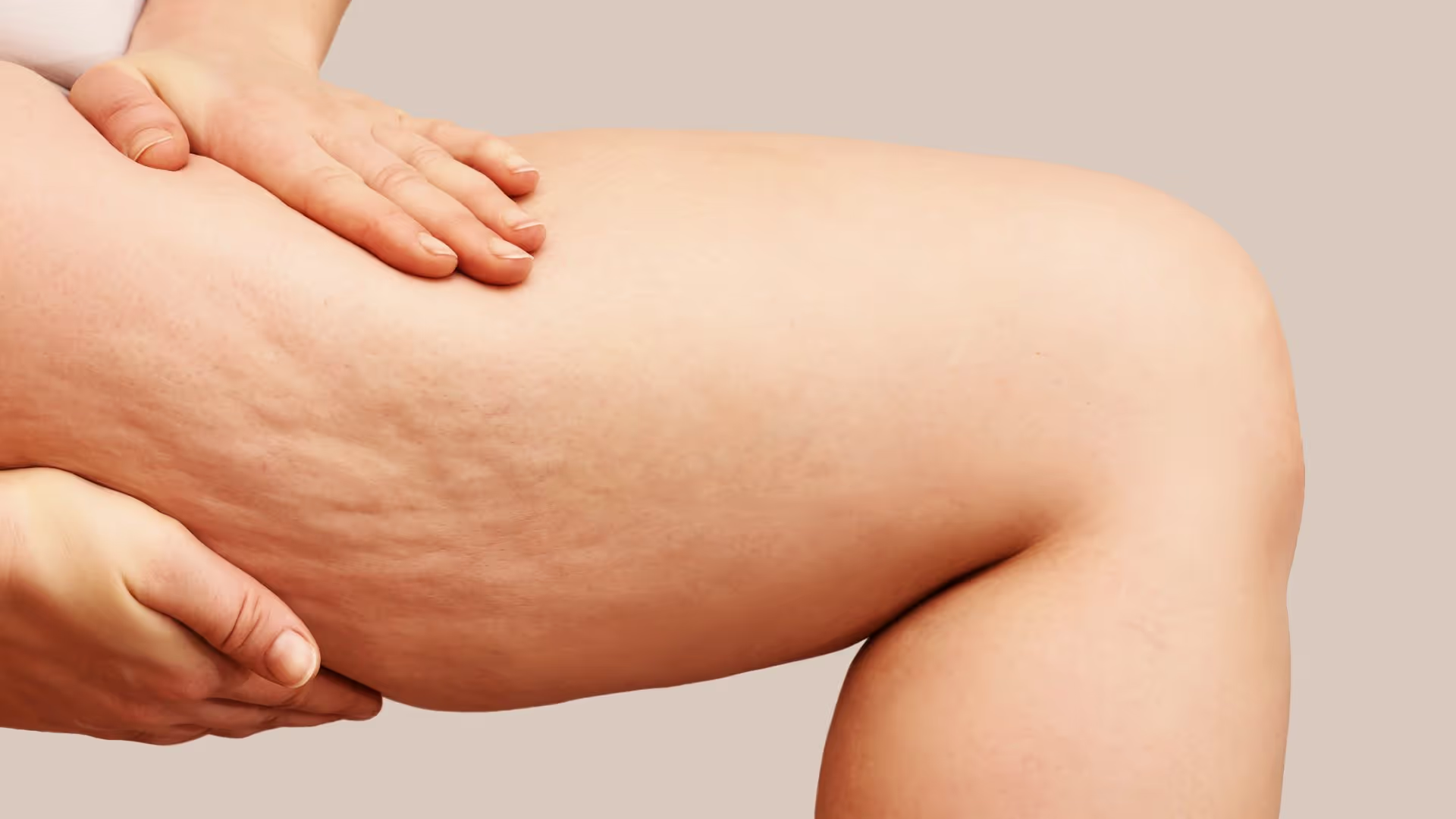
Many women notice changes in their body shape and skin texture, often characterized by dimpling and localized fat deposits. The immediate thought? Cellulite. While cellulite is a common and harmless cosmetic concern, it's crucial to understand that similar-looking symptoms can sometimes mask a far more serious condition: Lipedema. The question of Lipödem Oder Cellulite is not merely academic; it's a pivotal distinction that can profoundly impact a woman's health, well-being, and quality of life.
Often confused due to their visual similarities, Lipedema and cellulite are fundamentally different. One is a benign aesthetic phenomenon, the other a chronic, progressive, and often painful disease. Recognizing the true symptoms of Lipedema can be the first step towards an accurate diagnosis and appropriate management. This article delves deep into the defining characteristics of Lipedema, helping you move beyond superficial appearances to understand the underlying medical reality.
Cellulite: The Common Cosmetic Concern
Before we explore Lipedema, let's clarify what cellulite truly is. Colloquially known as "orange peel skin," cellulite affects an estimated 80-90 percent of women at some point in their lives, primarily after puberty. It is not a disease but a normal physiological change in the skin's connective tissue, usually appearing on the thighs, buttocks, and sometimes the arms.
What causes cellulite? It's primarily due to a combination of hormonal influences (especially estrogen), genetics, and the unique structure of female connective tissue. In women, the fat cells are arranged in vertical columns, and the fibrous bands of connective tissue run perpendicular to the skin. When fat cells enlarge, they push up against the skin, while the connective tissue pulls down, creating the characteristic dimpled appearance. Factors like diet, lifestyle, and circulation can influence its prominence, but they don't cause the underlying condition.
Key characteristics of cellulite:
- Cosmetic only: It's an aesthetic concern, not a medical one.
- Painless: Cellulite does not cause pain, tenderness, or discomfort.
- No swelling or inflammation: It's simply a textural change in the skin.
- Not progressive: While it might become more noticeable with age or weight gain, it doesn't worsen in a disease-like progression.
- Can affect anyone: Though more common in women, men can also develop it.
While many women find cellulite cosmetically bothersome, it poses no health risks. Medically speaking, there is no need for treatment.
Unveiling Lipedema: A Deeper Look at a Chronic Condition
In stark contrast to cellulite, Lipedema is a serious, chronic disease involving a pathological accumulation of fat, almost exclusively affecting women. It's a debilitating condition that can significantly impair a woman's physical comfort, mobility, and overall quality of life. Unlike general obesity or cosmetic fat, Lipedema fat is distinct, often unresponsive to diet and exercise, and characterized by specific symptoms that go far beyond mere aesthetics.
Lipedema typically manifests as a disproportionate, often symmetrical, enlargement of the legs, hips, buttocks, and sometimes the arms. A hallmark feature is the "sparing" of the feet and hands, meaning the fat accumulation abruptly stops at the ankles or wrists, creating a cuff-like appearance. This creates an uneven body proportion, where the lower body (or upper arms) appears significantly larger than the torso.
The disease involves an abnormal increase in adipose tissue (fat cells) that can also be accompanied by fluid retention, particularly in later stages. The fat cells themselves are often larger and more prone to inflammation and fibrosis.
Key Lipedema Symptoms to Watch For
If you're questioning Lipödem Oder Cellulite, paying close attention to these specific symptoms is crucial. These are the true indicators that distinguish Lipedema from cosmetic changes:
- Pain and Tenderness: This is perhaps the most critical differentiator. Lipedema fat is often exquisitely painful to the touch, pressure, or even light massage. Patients describe it as a dull ache, throbbing, or a feeling of constant pressure or heaviness, particularly in the affected limbs. The pain can worsen throughout the day, after prolonged standing or sitting, or during hormonal shifts.
- Symmetrical Fat Accumulation: The fat deposits are typically symmetrical on both sides of the body, affecting both legs or both arms equally.
- Disproportionate Body Shape: A significant difference in size between the upper and lower body (or arms and torso). For instance, a woman might wear a size S top but require XL pants.
- Resistance to Diet and Exercise: Despite diligent efforts with diet and exercise, the affected areas of Lipedema fat often do not shrink, or they may even continue to grow. This is a source of immense frustration and often leads to misdiagnosis as simple obesity.
- Easy Bruising: People with Lipedema often bruise very easily, sometimes without remembering any trauma. This is due to increased capillary fragility within the affected fat tissue.
- Swelling and Heaviness: A feeling of heaviness, tightness, and swelling in the affected limbs is common. This swelling, known as orthostatic edema, tends to worsen throughout the day and can be exacerbated by heat or prolonged standing. It may temporarily reduce with elevation or rest, but the underlying fat remains.
- Skin Changes: The skin in affected areas can feel cold to the touch due to poor circulation. Over time, it may develop a rubbery or nodular texture, feeling somewhat firm or lumpy. Dellen (dimples) similar to cellulite can also be present, sometimes more pronounced and painful than typical cellulite.
- Cuffing at Ankles/Wrists: As mentioned, the fat stops abruptly at the ankles and wrists, leaving the feet and hands typically unaffected, creating a noticeable "cuff" effect.
- Mobility Issues: As the condition progresses, the increasing volume and pain can lead to impaired mobility, difficulty walking, and joint problems, particularly in the knees and ankles.
Why the Confusion? Shared Visual Cues
The confusion between Lipödem Oder Cellulite arises because both can present with dimpled skin and localized fat. Early stages of Lipedema might appear similar to severe cellulite, making visual distinction challenging without considering other critical symptoms. However, the presence of pain, swelling, disproportionality, and the specific distribution patterns are key differentiating factors that push the diagnosis beyond mere cosmetic concerns.
For a more detailed comparison, you can read our comprehensive article on Lipedema vs. Cellulite: How to Spot the Key Differences, which provides a side-by-side analysis of these conditions.
Differentiating "Lipödem Oder Cellulite": The Critical Indicators
When you're asking yourself, "Do I have Lipödem Oder Cellulite?", focusing on the overall clinical picture rather than just dimples is essential. Here's a summary of the most critical indicators:
- Pain & Sensation: Lipedema causes pain, tenderness, and heaviness; cellulite does not.
- Swelling: Lipedema is often accompanied by swelling (edema) that worsens during the day; cellulite has no associated swelling.
- Body Proportions: Lipedema creates a distinct disproportion, with a smaller torso and larger lower body/arms; cellulite is a localized skin texture issue, not a body proportion problem.
- Fat Distribution: Lipedema fat symmetrically accumulates, sparing hands and feet; cellulite can appear anywhere, typically thighs and buttocks, without specific sparing patterns.
- Response to Weight Loss: Lipedema fat is notoriously resistant to diet and exercise; cellulite's appearance might lessen with overall weight loss, but the dimpling often remains.
- Bruising: Easy and frequent bruising is a common symptom of Lipedema; it is not associated with cellulite.
If you're grappling with the question of Painful Swelling or Dimples? Lipedema vs. Cellulite Guide, understanding these core symptoms is paramount. Any combination of pain, swelling, disproportionate body shape, and fat resistance to conventional weight loss should prompt further investigation.
Seeking a Diagnosis: Your Next Steps
Given the significant differences and health implications, self-diagnosis is not recommended. If you recognize several of the Lipedema symptoms mentioned above, particularly chronic pain, disproportionate fat, and easy bruising, it is vital to consult a healthcare professional. A general practitioner can be a good starting point, but ideally, seek a doctor familiar with Lipedema, such as a phlebologist, lymphologist, or a specialist in chronic fat disorders.
A thorough medical evaluation will involve a physical examination, medical history, and assessment of your symptoms. The doctor will look for the characteristic fat distribution, assess pain and tenderness, and differentiate from other conditions like lymphedema or simple obesity. Early diagnosis is key to managing Lipedema and preventing its progression and potential complications.
Living with Lipedema: Management and Outlook
While Lipedema is a chronic condition with no definitive cure, it is manageable. Treatment focuses on symptom relief, preventing progression, and improving quality of life. Approaches can include:
- Compression Therapy: Wearing specialized compression garments helps reduce swelling, pain, and prevent further fluid accumulation.
- Manual Lymphatic Drainage (MLD): A gentle massage technique that helps move lymphatic fluid and reduce swelling.
- Exercise: Low-impact exercises like swimming, walking, and cycling can help maintain mobility and lymphatic flow, though they won't reduce Lipedema fat itself.
- Healthy Diet: While diet won't "cure" Lipedema, a balanced, anti-inflammatory diet can help manage overall weight and reduce systemic inflammation.
- Pain Management: Various strategies, including medication and physical therapy, may be used to manage chronic pain.
- Surgical Options: In some cases, specialized liposuction (tumescent or water-jet assisted) performed by a Lipedema-experienced surgeon can effectively remove diseased fat tissue and significantly improve symptoms.
Conclusion
The distinction between Lipödem Oder Cellulite is profound. While cellulite is a harmless aesthetic feature affecting most women, Lipedema is a painful, chronic, and progressive disease with significant health implications. Understanding the true symptoms of Lipedema – chronic pain, disproportionate fat accumulation that resists diet and exercise, easy bruising, and swelling – is the first critical step toward an accurate diagnosis. If these symptoms resonate with your experience, do not delay seeking medical advice from a knowledgeable healthcare provider. Early and accurate diagnosis empowers you to access appropriate management strategies, mitigate disease progression, and ultimately reclaim your well-being and quality of life, moving beyond the cosmetic to address the true medical challenge.